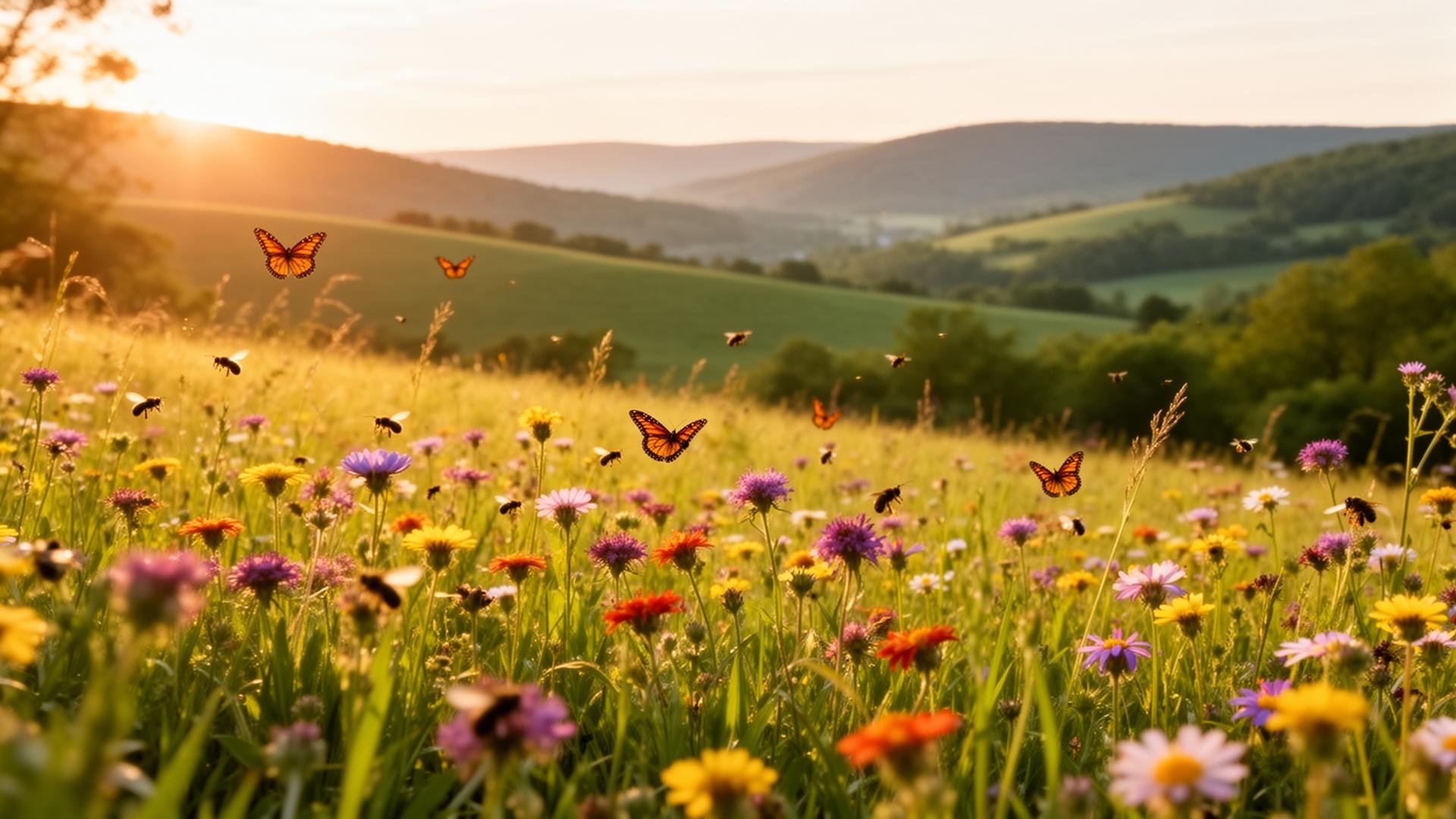
Hudson Valley native wildflower meadow
Hudson Valley Native Plant List

Native Plants That Feed Hudson Valley Pollinators

A curated field guide to plants historically native to the Hudson Valley bioregion — organized by garden type and by which pollinators depend on them. Every species here provides nectar, pollen, or is a host plant where at-risk butterflies and bees lay their eggs.

What "Native" Means Here

We define "native" using the New York Flora Atlas together with historical records that predate 20th-century deer overpopulation and land-use change. The result: plants that co-evolved with our regional pollinators — plus a small number of Northeast neighbors with proven relationships to Hudson Valley bees and butterflies.

The lists below are a starting point, not a limit. There are thousands more native species worth planting. If you're just beginning, pick 3–5 from the section that matches your site conditions and expand from there.

Sunny Gardens

Full sun (6+ hours), average-to-dry soil. The workhorse pollinator palette for most Hudson Valley yards.

  • Butterfly WeedAsclepias tuberosa
    Monarch host
  • Common MilkweedAsclepias syriaca
    Monarch host
  • Wild BergamotMonarda fistulosa
  • Purple ConeflowerEchinacea purpurea
  • Black-Eyed SusanRudbeckia hirta
  • Smooth Blue AsterSymphyotrichum laeve
  • Showy GoldenrodSolidago speciosa
  • Wild LupineLupinus perennis
    Frosted elfin host
  • Anise HyssopAgastache foeniculum
  • Mountain MintPycnanthemum muticum

Shady Gardens

Dappled to full shade under deciduous trees. Overlooked habitat that supports spring-ephemeral bees.

  • Wild GeraniumGeranium maculatum
  • Wild ColumbineAquilegia canadensis
    Hummingbird favorite
  • Golden AlexandersZizia aurea
    Black swallowtail host
  • Zigzag GoldenrodSolidago flexicaulis
  • Blue-Stemmed GoldenrodSolidago caesia
  • White Wood AsterEurybia divaricata
  • Blue Wood AsterSymphyotrichum cordifolium
  • FoamflowerTiarella cordifolia
  • Woodland SunflowerHelianthus divaricatus
  • BloodrootSanguinaria canadensis

Moist Gardens & Pond Edges

Rain gardens, low spots, streambanks, and pond margins. Some of the highest-value pollinator plants live here.

  • Swamp MilkweedAsclepias incarnata
    Monarch host
  • Joe-Pye WeedEutrochium maculatum
  • BonesetEupatorium perfoliatum
  • New England AsterSymphyotrichum novae-angliae
  • Great Blue LobeliaLobelia siphilitica
  • Cardinal FlowerLobelia cardinalis
    Hummingbird favorite
  • Blue VervainVerbena hastata
  • TurtleheadChelone glabra
    Baltimore checkerspot host
  • Marsh MarigoldCaltha palustris
  • Swamp Rose MallowHibiscus moscheutos

Urban Gardens & Tough Spots

Compacted soil, road salt, reflected heat, hellstrips, and parking-lot edges. Bulletproof natives that keep flowering.

  • Partridge PeaChamaecrista fasciculata
    Sulphur butterfly host
  • Gray GoldenrodSolidago nemoralis
  • Calico AsterSymphyotrichum lateriflorum
  • Evening PrimroseOenothera biennis
    Sphinx moth nectar
  • Little BluestemSchizachyrium scoparium
    Skipper host
  • Path RushJuncus tenuis
  • Prickly PearOpuntia humifusa
  • Common MilkweedAsclepias syriaca
    Monarch host

Groundcovers for Pollinators

Lawn alternatives, understory carpet, and living mulch that still feeds bees.

  • Pennsylvania SedgeCarex pensylvanica
  • Wild StrawberryFragaria virginiana
  • Barren StrawberryGeum fragarioides
  • Common Blue VioletViola sororia
    Fritillary host
  • Wild GingerAsarum canadense
  • Golden RagwortPackera aurea
  • Creeping PhloxPhlox stolonifera
  • BearberryArctostaphylos uva-ursi

Native Shrubs

Structure, berries for birds, and huge floral resources per square foot. Plant one shrub, feed dozens of species.

  • ButtonbushCephalanthus occidentalis
  • SteeplebushSpiraea tomentosa
  • White MeadowsweetSpiraea alba
  • New Jersey TeaCeanothus americanus
    Specialist bee forage
  • Northern Bush HoneysuckleDiervilla lonicera
  • Highbush BlueberryVaccinium corymbosum
    Blueberry specialist bee
  • Smooth SumacRhus glabra
  • Winterberry HollyIlex verticillata
  • ElderberrySambucus canadensis
  • ServiceberryAmelanchier arborea
    Early-spring bee resource

Ornamental & Shade Trees

Native trees are keystone species — a single mature oak supports 500+ species of caterpillars.

  • White OakQuercus alba
    Keystone: 500+ caterpillar species
  • Red OakQuercus rubra
    Keystone
  • Black CherryPrunus serotina
    Keystone: cherry specialist bees
  • American BasswoodTilia americana
    Premier honey tree
  • Tulip TreeLiriodendron tulipifera
    Tiger swallowtail host
  • Eastern RedbudCercis canadensis
  • American SycamorePlatanus occidentalis
  • Sugar MapleAcer saccharum
  • WillowSalix spp.
    Earliest spring bee forage

Host Plants for Specialist Butterflies & Moths

Specialists can only reproduce on specific host plants. No host, no butterfly — this is where you save species.

  • Milkweeds (all Asclepias)Asclepias spp.
    Monarch — sole host
  • TurtleheadChelone glabra
    Baltimore checkerspot
  • Wild LupineLupinus perennis
    Frosted elfin, Karner blue
  • SpicebushLindera benzoin
    Spicebush swallowtail
  • PawpawAsimina triloba
    Zebra swallowtail — sole host
  • Wild CherryPrunus serotina
    Coral hairstreak, tiger swallowtail
  • Violets (all Viola)Viola spp.
    All fritillary species
  • Little BluestemSchizachyrium scoparium
    Multiple skipper species
  • Golden AlexandersZizia aurea
    Black swallowtail

Forage Plants for Specialist Bees

About a third of Hudson Valley native bees are pollen specialists — they can only feed their young from specific plant genera.

  • Spring BeautyClaytonia virginica
    Andrena erigeniae specialist
  • Trout LilyErythronium americanum
    Andrena erythronii specialist
  • Highbush BlueberryVaccinium corymbosum
    Blueberry bee (Habropoda)
  • PickerelweedPontederia cordata
    Dufourea novaeangliae specialist
  • Evening PrimroseOenothera biennis
    Lasioglossum oenotherae specialist
  • Goldenrods (all Solidago)Solidago spp.
    20+ goldenrod-specialist bees
  • Asters (all Symphyotrichum)Symphyotrichum spp.
    Aster-specialist Andrena
  • Sunflowers (all Helianthus)Helianthus spp.
    Sunflower-specialist Melissodes
  • SquashCucurbita spp.
    Squash bee (Peponapis)

Ready to Plant?

Read our field guides on individual native species, or start converting turf grass into pollinator habitat with our free milkweed program.